
NEWS | Artur Lima defends that next European budget “will have to meet the aspirations and demands of the Azores”


The Vice-President of the Regional Government, Artur Lima, emphasised today that the proposal for the 2028–2034 Multiannual Financial Framework (MFF 2028–2034) “did not serve the Azores, ignoring what sets us apart.”
During a forum dedicated to the new Multiannual Financial Framework 2028–2034, held today in Ponta Delgada, the Vice-President considered that the reduced emphasis on cohesion, agriculture and fisheries policies, as well as the merging of these policies into a single framework, “raises serious concerns.”
Artur Lima emphasised that “a Europe that wishes to value its regions cannot concentrate decision-making power in the Member States through National and Regional Partnership Plans.”
In the same vein, he defended that “the National Government cannot do so either, lest it undermine an established right that allows us to participate in shaping our future.”
Mentioning the ongoing negotiations on the 2028–2034 MFF, which “are now entering a decisive phase,” the government official stated that “it is time to reiterate that we will not relinquish our right to have a say in determining the course we wish to take.”
Artur Lima guaranteed that the Azores “will not give up on the POSEI Agriculture programme or on support for our fishers.” Likewise, “they will not give up on the development of air and maritime connectivity, nor on European territorial cohesion, for one simple reason: our railways are the air and the sea,” he emphasised.
Regarding the new European priorities for competitiveness, security and defence, the Vice-President of the Regional Government noted that the Region aims to “promote the competitiveness of the business sector and the transfer of knowledge between companies and the regional innovation ecosystem.”
In this context, he recalled the creation of a funding scheme to cofinance international projects in 2025, as well as the programme to cover doctoral tuition fees for workers and the amendments to the RIS3 to provide the Region with expertise in the fields of Health, Geopolitics, Data Science and Space.
However, he assured that the Region “will not accept its traditional sectors being left behind.”
Artur Lima also addressed the new European strategy for the Outermost Regions. This document, adopted by the European Commission on September 10, recognises, on the one hand, the specific characteristics and needs of these regions for their sustainable development. On the other hand, it reinforces the geostrategic importance of these regions for the European Union.
“In the Azores, this has long been a well-known fact. I have always believed that we had never lost our geostrategic importance,” he said.
“We play a crucial role: submarine cables carrying data between Europe and the rest of the world pass through here or near the archipelago,” the government official stated, adding that “our EEZ accounts for almost 60% of Portugal’s EEZ, giving Portugal and the European Union unrivalled maritime reach.”
According to the government official, “it is good to remind Mainland Portugal and Europe, as often as necessary, who we are and what we are.”
For the first time, a European strategy for the Outermost Regions is accompanied by a regulatory package containing measures specifically designed to meet the needs of these territories.
In this context, Artur Lima emphasised that this is “a legal recognition of Article 349 of the TFEU, a right that was long overdue and a clear political commitment for which we have fought, one that we acknowledge and look forward to with anticipation.”
However, he warned that these measures “do not fulfil what the Treaty promises, as they are exclusively directed at the French outermost regions.” The implementation of Article 349 “should not be something we have to remind the European Commission or the National Government of,” he stressed.
“We are not asking for privileges, nor for golden exemptions,” said the Vice-President. In this context, he assured that the special and structural conditions mentioned in the Treaty “are felt every day” in the Azores “by businesses and entrepreneurs, farmers and fishers, and by all Azoreans, from Santa Maria to Corvo, for whom the active participation in the European project and shared access to all its benefits has always been far more difficult.”
For Artur Lima, the 2028–2034 MFF “will have to respond to our legitimate aspirations and demands, and will have to recognise what we represent for Europe.”
“It is through the Azores that Portugal and the European Union acquire their Atlantic dimension. More than just an outermost region, we are the home of this European link with the world. It is time for this role to be duly recognised,” he asserted.
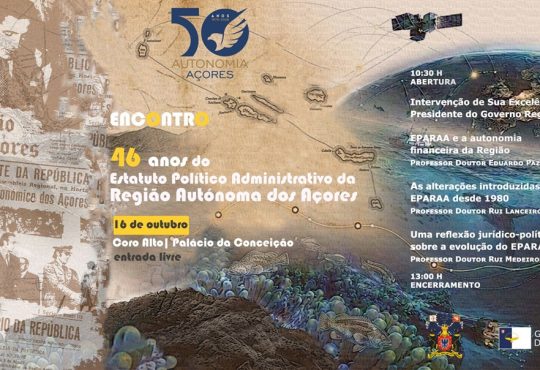
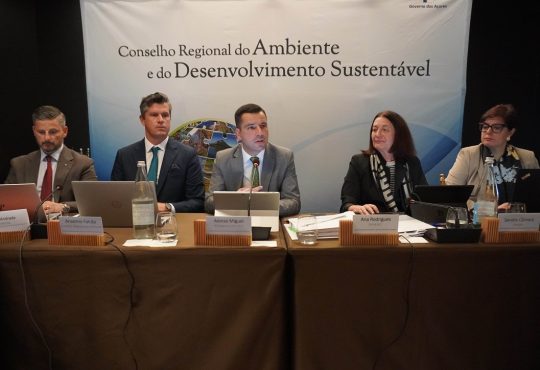
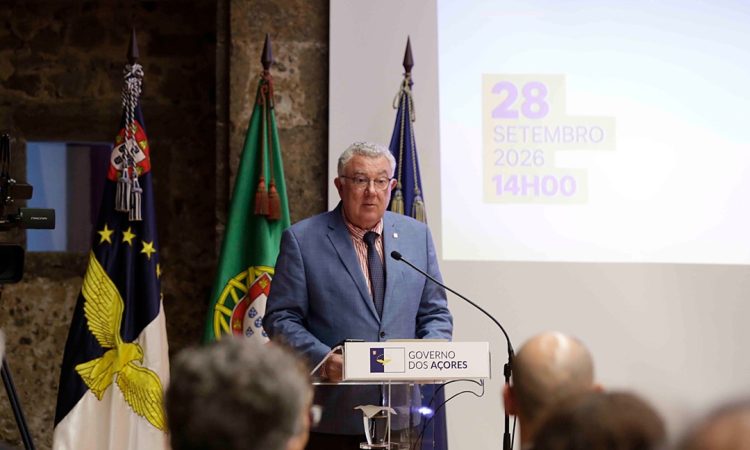
The Forum on the Multiannual Financial Framework (MFF) 2028–2034 took place today at the Conceição Palace in Ponta Delgada and was chaired by the Vice-President of the Regional Government.
The event brought together European representatives and regional officials to discuss the European Union’s priorities, the challenges of the next European budget and the future of the Outermost Regions, reinforcing the Azores’ participation in this process.
GRA/RÁDIOILHÉU