
NEWS | Berta Cabral says there is already new model for maritime transport in the Azores

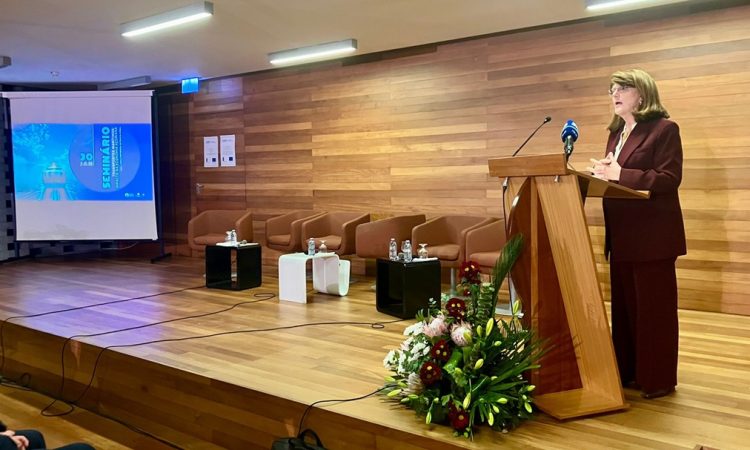

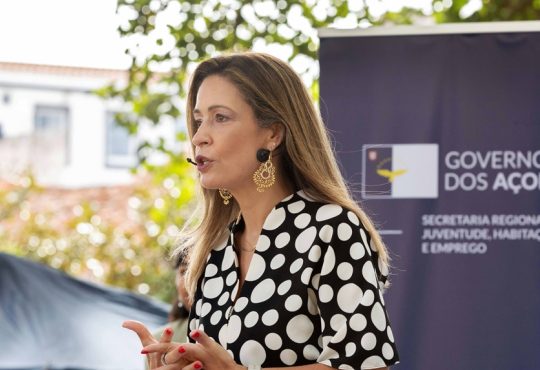
The Regional Secretary for Tourism, Mobility and Infrastructures, Berta Cabral, stated on Friday that a new model for maritime freight transport in the Azores is already in operation, following a study commissioned by the Government.
The government official spoke at the closing session of the Transport Seminar “Maritime Transport: Impact on the Azorean Economy,” promoted by the Chamber of Commerce and Industry of Angra do Heroísmo in Praia da Vitória, Terceira Island.
“We have conducted a pragmatic study, which focused on practical issues, and immediately moved on to implementing a new model. Today, we already have tangible results, such as weekly services on all islands, more port equipment, and adjustments to port operations,” stated the government official.
She added: “We have already implemented scenario 2 and are now moving progressively and safely towards the optimised mixed scenario.”
The Regional Secretary also stated that maritime transport, especially freight transport, “is one of the structural pillars of the economy, territorial cohesion and the regular functioning of the Autonomous Region of the Azores.”
Berta Cabral pointed out, however, that this is “one of the most complex issues in regional governance, as there are no magic solutions and there can never be any disruptions jeopardising public supply.”
The government official also stressed that, in an “dispersed and remote archipelago subject to permanent natural constraints,” the maritime transport of goods goes far beyond a mere logistical operation.
She added: “It is an essential and crucial service for supplying the islands, boosting the competitiveness of businesses, controlling context costs and ensuring the stability of the internal market.”
The Regional Secretary recalled that, for many years, this sector faced “irregular schedules, disparities in service between islands, lack of predictability, operational constraints and a model that did not always respond to the real needs of the regional economy.”
For this reason, the Regional Government has brought about a structural change in the maritime freight transport model, “which is experiencing growing pains and can never jeopardise the service or supply of any island.”
Throughout this process, she stressed, the Government “has never compromised on basic principles such as frequency, predictability, balanced territorial coverage and operational efficiency.”
The Regional Secretary took the opportunity to publicly thank the Independent Technical Commission, composed of João Carvalho, Ribeiro Pinto and Francisco Silva, for their professional, dedicated and impartial monitoring throughout the study.
“In recent years, we have moved forward with a quiet but assertive reorganisation, without causing disruption and favouring safe and progressive evolution,” she added.
According to the government official, the increased frequency achieved enabled companies to ‘better plan their activities, reduce stock shortages, optimise supply chains, reduce indirect costs associated with logistical uncertainty and enhance the value of endogenous production.”
At the same time, the Regional Government has made strategic investments in modernising port infrastructures, equipment and operating conditions.
“We have made up for historical delays, boosted the installed capacity and created better conditions for efficiency, safety and reliability in freight transport,” she said.
According to Berta Cabral, the Regional Port Authorities have invested more than €27 million in equipment since 2021, with more than €63 million currently underway and planned until 2028, including another two tugboats. Regarding port infrastructures, investments in the same period surpassed €201 million, with more than €316 million underway and planned until the end of 2028.
Berta Cabral also highlighted the strengthening of coordination between the various public and private stakeholders. In this regard, she emphasised the “path of structural organisation of port operations, with the appropriate separation of duties between the Regional Port Authorities and other players in the sector, as well as greater coordination and optimisation of available resources.”
She recalled that the preliminary process leading to the sale of public holdings in the companies OperPDL, OperTER and OperTRI is currently underway.
Furthermore, she pointed out that it is also important to improve the coordination of local traffic with national and international logistics chains.
“This factor is particularly relevant for export sectors and companies depending on imported raw materials,” she said.
“Today, we have more vessels, more links, greater predictability, better operational efficiency and greater responsiveness to the needs of our populations. We are reducing disparities between islands and contributing to greater territorial cohesion,” she also stated.
Regarding maritime passenger transport, Berta Cabral highlighted the recovery of Atlânticoline, “now a healthy company and an example for the entire public business sector in the Azores.” She also noted the consolidation of the model based on public service obligations, ensuring inter-island mobility with predictability, financial responsibility, and adequacy to actual demand.
Berta Cabral reiterated the Regional Government’s commitment to regard maritime transport as “an integrated public policy, where logistics, economy, territorial cohesion and sustainability run side by side.”
“We will continue to invest where it is strategic, adjust the model whenever necessary and work closely with operators, chambers of commerce and economic agents,” she concluded.
GRA/RÁDIOILHÉU