
AZORES | Regional Government promotes training courses for Nature Park Guides

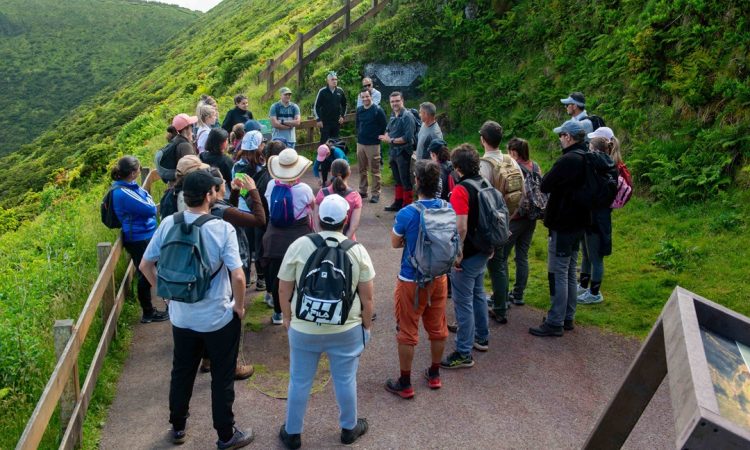

The Regional Secretariat for the Environment and Climate Action, in partnership with the Chamber of Commerce and Industry of Angra do Heroísmo, has been organising several training sessions as part of the Azores Nature Park Guides course and the Pico Mountain Guides course, with a view to addressing the shortcomings identified in recent years, as well as improving mechanisms for guided and qualified visits in the Region.
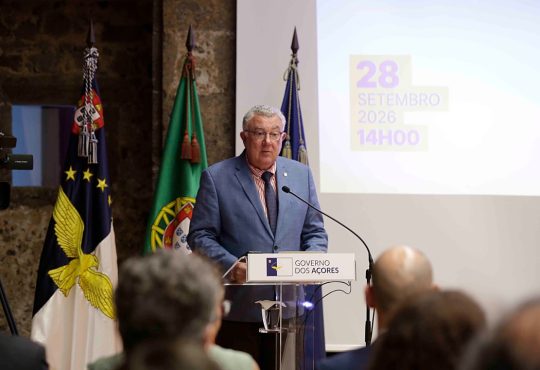
The Regional Secretary for the Environment and Climate Action, Alonso Miguel, pointed out that, in 2025, two training sessions were organised as part of the Azores Nature Park Guides course, one on Pico and one on São Miguel, as well as a training session under the Pico Mountain Guides course. He added that “another training session was held in São Miguel in early 2026, and a training session for the Azores Nature Parks Guides course in Faial is already being scheduled, as well as a training session for the Caldeira do Faial Guides course, both scheduled for the last quarter of 2026.”
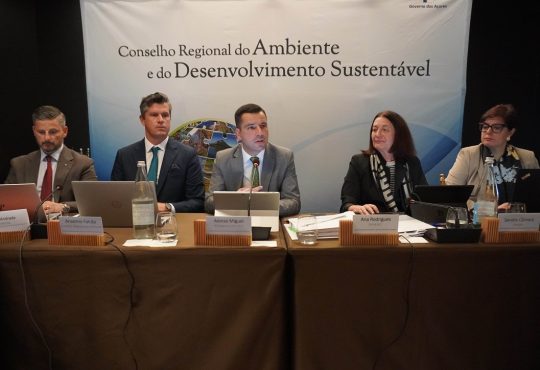
Alonso Miguel pointed out that “in light of the results of the assessment of previous editions, it was found necessary to overhaul the Azores Nature Park Guides course. Following consultation with the Regional Council for the Environment and Sustainable Development (CRADS), this resulted in Ordinance no. 86/2024 of October 8, 2024, which approves the admission requirements, the curricula and the assessment system for the training programmes to become a Nature Park Guide in the Azores, a Pico Mountain Guide and a Faial Caldera Guide.”
The government official emphasised that, as part of these changes, “a thorough review was carried out into the syllabus content of the accredited courses, considering current needs as well as opportunities for improvement identified by instructors, trainees and the training entity during previous editions of the programmes. This required modifications to the structure and content of various course modules, as well as the conversion of some modules previously delivered in an in-person format to an online format.”
Alonso Miguel explained that the Azores Nature Parks Guides course runs for 117 hours and comprises nine modules covering all the islands of the Azores, as well as a specific module for each island’s Nature Park.
The Secretary for the Environment noted that “this course comprises modules in various areas, such as biodiversity and geodiversity, cultural and historical heritage, traditions, visitor services, risk management and first aid.”
Alonso Miguel pointed out that “the environmental department has organised, since 2015, a total of 24 training sessions for the Azores Nature Parks Guides course, held across all the islands of the Azores, four training sessions for the Pico Mountain Guides course, and two training sessions for the Caldeira do Faial Guides course. These courses are accredited by the Regional Directorate for Employment and Vocational Training.”
The government official pointed out that “the Azores currently have 445 certified Azores Nature Park Guides, spread across the nine islands: four on Corvo Island, 13 on Flores Island, 24 on São Jorge Island, 18 on Graciosa Island, 51 on Terceira Island, 170 on São Miguel Island, in addition to a further 20 trainees who have very recently completed the course, 13 on Santa Maria Island, 40 on Faial Island and 92 on Pico Island.”
“Since 2004, a total of 119 Pico Mountain Guides have been certified, although some of them no longer work regularly. We currently have 43 certified guides authorised to operate in the Caldeira do Faial Nature Reserve, who are qualified to work in this protected area,” he added.
According to Alonso Miguel, “promoting the training of Nature Park Guides on Pico Island and Pico Mountain Guides is a strategic need to qualify more professionals in the nature tourism sector, given that, for various reasons, many of the Mountain Guides receiving training in previous years do not work as guides on Pico. This has led to a shortage of staff for companies to meet visitor demand, particularly during the high season.”
The Regional Secretary announced that “digital cards are being developed for all certified guides, as the replacement of physical cards contributes to the modernisation and digital transition of public administration, with an ecological focus on saving materials and financial resources.”
Alonso Miguel also stressed that “the Regional Government has been creating the necessary mechanisms to protect the unique natural heritage of the Autonomous Region of the Azores, intending to preserve it and ensure its legacy for forthcoming generations.” The government official added that “nature tourism requires an approach committed to the preservation of natural ecosystems and the adoption of good environmental practices.”
He concluded: “These courses play a fundamental role in enhancing the services provided by professionals guiding groups of visitors to protected areas, thereby improving their knowledge and contributing to an informed and safe visiting experience, as well as to the development of sustainable nature tourism.”
GRA/RÁDIOILHÉU