
NEWS | Regional Government steps up investment in career guidance and vocational support for school-aged young people


The Regional Secretary for Youth, Housing and Employment announced today that the Regional Government is stepping up its investment in screening and vocational and career guidance for school-aged young people, aligned with the strategic proposal of the Regional Agenda for Vocational Education (ARQP) – Empowering Azoreans – Azores 2030.
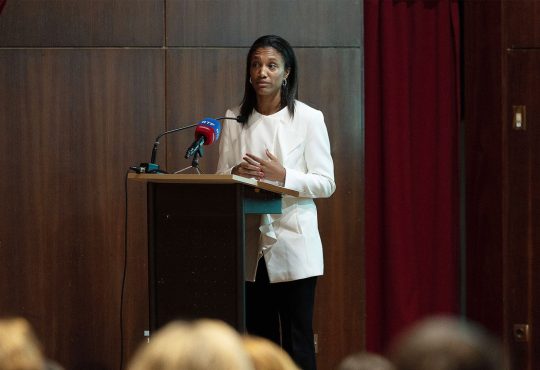
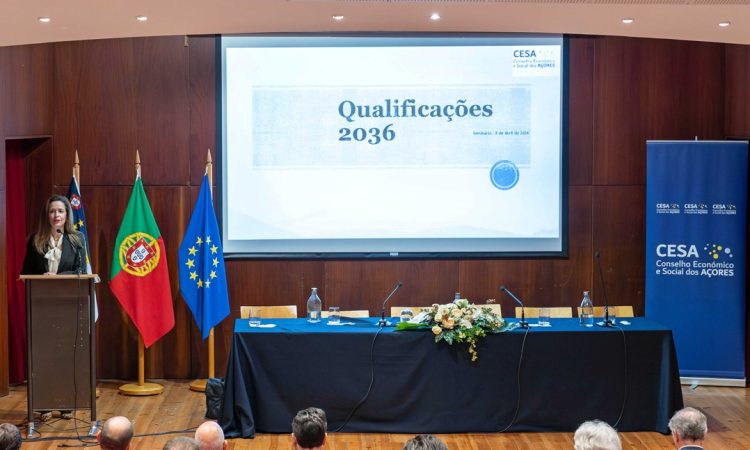
Maria João Carreiro spoke at the closing session of the “Qualifications 2036” seminar, organised by the Economic and Social Council of the Azores (CESA) in Ponta Delgada. On the occasion, she highlighted the increased focus on the Vocational and Career Guidance Office (GOVP) – established in 2022 – in supporting school-age young people in the Azores.
“With GOVP, screening and vocational and career guidance sessions for school-aged young people will be further stepped up and expanded, encouraging them to draw up an individual career plan – an essential step in preventing these young people from becoming NEETs,” she explained.
As the government official announced on Tuesday at a press conference to present the interim results of the ARQP, the NEET rate among young people in the Azores fell from 19.3% in 2020 to 12.1% in 2024, whilst the 2025 target set in the ARQP stood at 15%, representing a “very positive development” for the Region.
Among other targets, the ARQP sets out the implementation of measures and actions to reduce the NEET rate among young people, through new models of early vocational guidance.
“From the early school years, Azorean young people now have access to more coordinated measures from the Regional Directorate for Youth and the Regional Directorate for Vocational Training and Employment, which provide opportunities for vocational guidance and socio-professional integration,” she emphasised.
According to her, GOVP “has been essential” in developing tailored training and employment solutions for NEETs, the long-term unemployed and other groups most in need of support, having already conducted 2,415 individual sessions and 420 group sessions with registered jobseekers.
Maria João Carreiro also pointed out that public policies for training and employment “are being developed within a context that is profoundly different from that of five, 10, 15 or 20 years ago,” noting that the Region has seen its young population aged between 15 and 34 decrease by more than a quarter, falling from 78,469 to 57,434.
“There are fewer young people in the Region’s demographic structure, longer educational pathways and more challenging transitions between education and work,” she noted.
In a context where early dropout rates from education and training have fallen sharply compared with the figures of 20 years ago, the Region now has record highs in the number of employed people and record lows in the number of unemployed, she highlighted.
According to the Regional Secretary, the Region “has moved from a model heavily reliant on employment schemes and precarious contracts to one increasingly focused on skills development, permanent employment and job quality,” as a response to the cyclical and structural challenges in training and employment that still persist.
Since 2021, from the more than 7,200 placements under the hiring support scheme, 4,892 have benefited young people, with 87% on permanent contracts.
“The shift in the profile of supported hiring is clear: whilst in 2017 only 1.1% of placements were permanent contracts, this figure reached 100% in 2025,” she concluded.
Maria João Carreiro also noted that the initiative promoted by CESA, “Coordinated Public Action in Education and Vocational Training for Vulnerable Groups,” underlined the importance of the path the Region has been following since 2021, a process in which the Regional Government relies on CESA’s contribution and participation.
GRA/RÁDIOILHÉU